7 Signs It’s Time to Call an Electrician for a New Panel

As your home’s electrical demands increase over time, your existing panel may no longer keep up. Below are seven clear indicators it might be time to bring in a professional — and when doing so, Baker Electric Co. is ready to help.
New Electrical Panel Old Electrical Panel that needs replacing Electrical Power Source Installation in Cleveland TN
1. Your Pre-2000's Home Has the Same Old Panel It’s Always Had
If your panel service size is 60 amps or 100 amps (common in older homes) but you’re now running central HVAC, multiple smart devices, a big kitchen remodel, EV charger, etc., you may have outgrown your panel. According to experts, many older homes still have 60 or 100-amp service, which is insufficient for modern loads. Modern homes often need 200-amp service (or more for large homes) to safely handle current and future usage. If you’re wondering whether your panel is large enough, this is a good time to call Baker Electric Co. for a proper evaluation.
2. Frequent Tripped Breakers or Blown Fuses
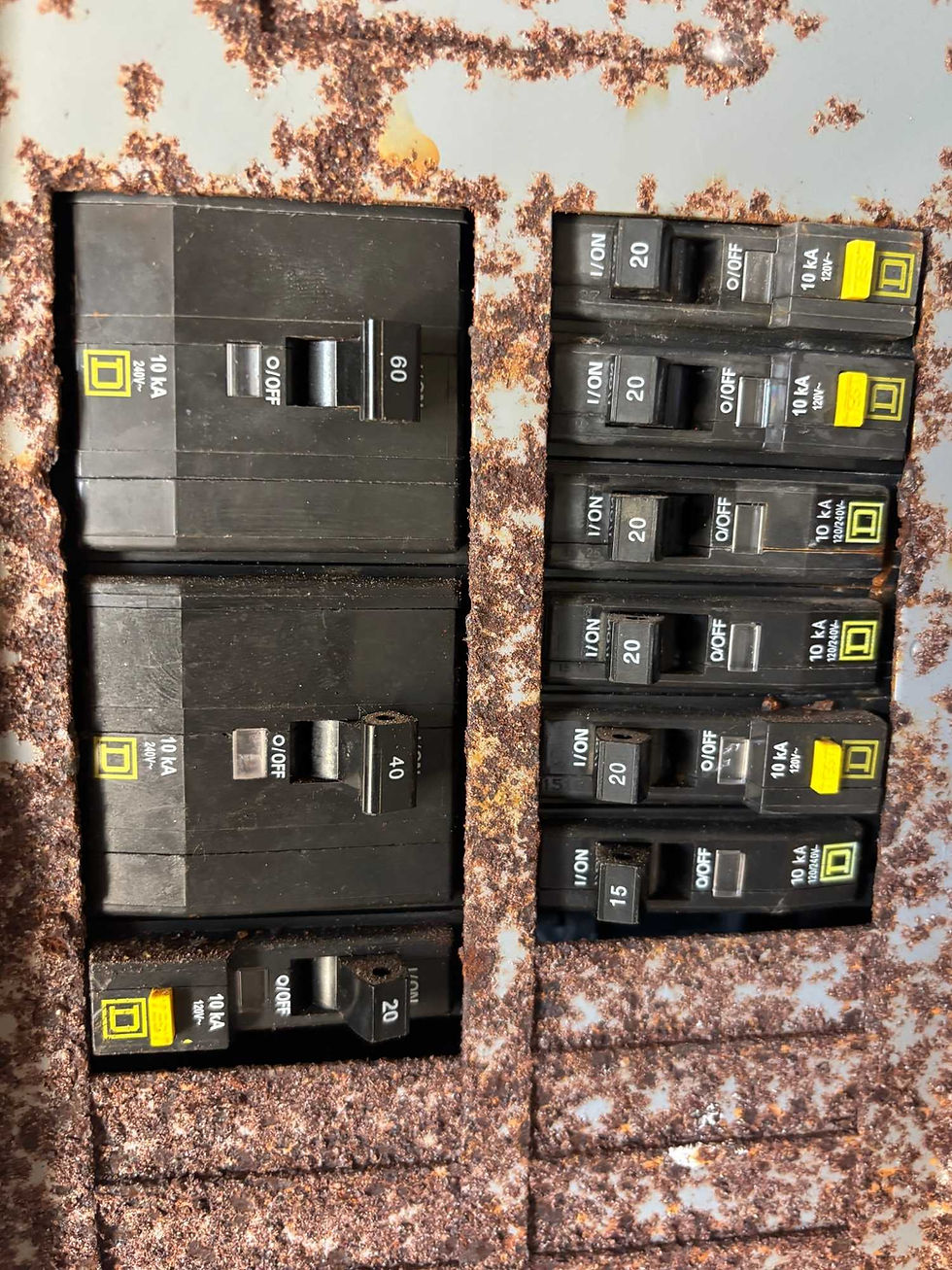
If circuits trip regularly (especially when you add a holiday string of lights, space heater, or other seasonal load) there is a strong sign your panel or service capacity is inadequate. The breakers shouldn’t constantly do their job — if they’re doing it often, something upstream may be undersized.
3. Your Panel Is Hot to the Touch, Noisy, or Showing Signs of Wear
If the panelbox feels warm/hot, you hear buzzing, crackling, or you see scorch-marks/rust, that’s a red flag. Over time parts wear out and old panels may not offer modern safety features. One cost/panel guide notes panels nearing 25-40 years may need replacement. Don’t wait until an electrical fault or fire risk arises.
4. You’re Planning an Addition, Big Appliance, or EV Charger
If you plan to install major new loads (like a second HVAC system, electric vehicle charger, workshop equipment, or finish a basement) then your current panel may not support the new demand. It’s better to upgrade proactively than try to patch things later.
5. Signs That Your Home’s Ampacity Is Too Low for Current Usage
If you open the panel and see that the main breaker is undersized (say 100 amps) or the panel label is missing/faded, those are strong cues. Experts note that if you have less than 200 amps in a home built or renovated for today’s loads, you may be under capacity.
Call Baker Electric Co. to review the service size, circuit layout, and likely future loads and determine whether an upgrade makes sense.
6. Going Into Holiday Light Season + Dipping Temperatures
As you head into the holiday season (string lights, outdoor displays, extra indoor loads) and colder months (space heaters, more lighting use, thermostats working harder) you are entering a higher‐stress period for your panel.
If your panel already has marginal capacity, adding holiday decorative lighting and increased heating load may push it over the brink.
If you see flickering lights when holiday lights are plugged in, breakers trip when you turn on a heater or holiday light string, or outlets feel warm, that’s a clear signal.
The colder temperatures may cause certain components (especially in exterior or less‐insulated parts of your electrical system) to behave differently (metal contraction, moisture intrusion, etc.).This is the perfect time to call Baker Electric Co. and schedule a panel inspection/upgrade before the holiday and winter season rush.
7. Your Insurance or Local Code Requires It / The Panel Is Obsolete
If your home has an older panel type (fuse‐box style, or a brand/model that’s been recalled or has known issues) you may have difficulty with insurance claims, resale, or compliance with updated local building codes. Panels have lifespans and safety standards evolve. Rather than risk an insurance denial or a failed inspection when you go to sell, upgrading now with Baker Electric Co. gives peace of mind.
Comparison: Types of Electrical Panels to Consider
When you call Baker Electric Co., you’ll get expert guidance on the right panel for your home’s size, usage, future plans, and budget. Here’s a breakdown of typical panel service sizes and how they compare.
Panel Size (Amps) | Typical Home Usage | Pros | Considerations |
100 amp | Smaller homes, limited appliances, minimal HVAC, built decades ago | Lower cost upgrade; meets minimal needs | May not support modern loads (EV charger, large HVAC, many circuits) — may become outdated quickly. ∙ |
150 amp | Mid‐sized home, moderate loads, some newer appliances | More headroom than 100 amp | Less common as a standard; future loads (EV, large HVAC) may require larger service later. |
200 amp | Most modern single‐family homes, multiple appliances, future proofing, ability to add EV charger | “Sweet spot” for many homeowners, good safety margin and code compliance. ∙ | Cost is higher; if your home is very small and basic, this might exceed immediate need. |
400 amp (or dual 200 amp) | Large homes, heavy loads, workshops, EVs, multiple HVAC zones | Plenty of capacity; long‐term proofing | Significantly higher cost; may require large wiring/mechanical modifications. |
Which one is right for you?
When Baker Electric Co. comes out for an inspection, they’ll evaluate: square footage of your home, current and planned appliances/HVAC/EV chargers, circuit layout, existing wiring condition, any sub‐panels, age of the system, and whether you have indicators of overload. If your home currently has a 100 amp panel but you’re planning an EV charger or major addition, going directly to a 200 amp upgrade may be smarter long‐term than patching the 100 amp. If your home is fairly small, nothing major is going to be added, and the panel is in good shape, maybe a 150 amp (if available) or replacement like‐for‐like could be acceptable.
Estimated Pricing for Panel Replacement Service
Here are some ballpark figures to help you budget. (Actual cost will vary by complexity, local labor, permitting, accessibility, condition of wiring, whether your meter or service drop needs upgrade, etc.)
Basic replacement of an existing 100 amp panel with similar capacity: around $1,000 to $2,000.
Upgrade to a 200 amp panel in a typical home: around $1,800 to $4,500.
Major upgrade (panel relocation, 400 amp service, full rewiring): could run $3,500 to $8,000+ depending on scope.
Additional costs to watch for: permits/inspections ($50-$300+), rewiring outdated circuits, moving the panel location, upgrading the meter or service drop, drywall repair, etc.
Because each home and job is different, Baker Electric Co. provides free estimates so you can understand your specific scope and cost. (423) 464-3781
Why Choose Baker Electric Co. in Cleveland, TN?
Located at 251 Ashlin Meadow Ln NE, Cleveland, TN 37312, Baker Electric Co. is your local trusted residential & commercial electrician in East Tennessee. Baker Electric Co. They are licensed and insured, offer efficient solutions, responsive customer service, and prioritize safety and sustainable solutions. Baker Electric Co. If you’re noticing panel age, overload symptoms, or planning for the holiday/winter load increase, it’s a smart time to call them.
With holiday lights going up soon and colder temperatures on the way, your home’s electrical system will see added demands. If your panel already shows signs of strain, waiting until after the holidays may be riskier and more costly. Call Baker Electric Co. now to inspect, evaluate your needs, review panel options (100-amp vs 200-amp vs 400-amp), get a transparent estimate, and schedule the work at a time convenient for you. Upgrading now can mean safer power, fewer breaker trips, improved capacity for the future, and peace of mind.
Robert Baker

Comments